

Have you ever scrolled through social media and felt like everyone else was enjoying a better life than you? Maybe your friends posted pictures from a party you missed, a coworker celebrated a promotion, or someone shared an exciting vacation. If you’ve experienced that uneasy feeling, you may have wondered about the FOMO meaning. FOMO, which stands for Fear of Missing Out, describes the worry that other people are having rewarding experiences without you. Today, it has become a common part of internet culture, especially because we are constantly connected through our smartphones and social networking platforms.
Understanding what FOMO means is more than learning a new term. It helps you recognize why these emotions happen and how they can affect your mental well-being, self-esteem, and everyday decisions. In this guide, you’ll discover the FOMO definition, learn what causes it, explore real-life examples, understand its effects on mental health, and find practical ways to overcome it. By the end, you’ll have a clear understanding of fear of missing out meaning and how to build healthier digital habits.
⚡ Quick Answer
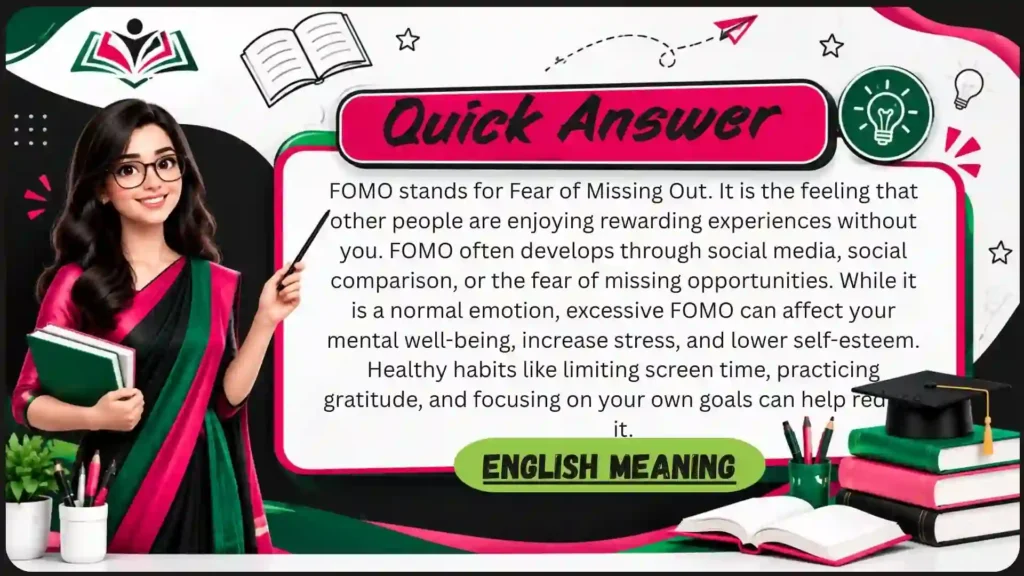
FOMO stands for Fear of Missing Out. It is the feeling that other people are enjoying rewarding experiences without you. FOMO often develops through social media, social comparison, or the fear of missing opportunities. While it is a normal emotion, excessive FOMO can affect your mental well-being, increase stress, and lower self-esteem. Healthy habits like limiting screen time, practicing gratitude, and focusing on your own goals can help reduce it.
📌 TL;DR
- ✅ FOMO means Fear of Missing Out.
- ✅ It is the worry that others are having better experiences than you.
- ✅ Social media is one of the biggest triggers of FOMO.
- ✅ Common signs include constant comparison, anxiety, and fear of missing opportunities.
- ✅ FOMO can affect mental health, self-esteem, and decision-making.
- ✅ You can overcome FOMO by practicing gratitude, reducing social media use, and embracing JOMO (Joy of Missing Out).
You Might Also Like That: Okay vs OK
🌟 What Does FOMO Mean?
The FOMO meaning is simple. FOMO stands for Fear of Missing Out, which is the feeling that other people are enjoying exciting experiences without you. It often makes you worry that you are missing something important, fun, or rewarding. This feeling can happen in your personal life, at work, or while using social media.
Today, many people ask, “What does FOMO mean?” because they experience it regularly. Seeing friends travel, attend events, or celebrate achievements online can create social anxiety, encourage social comparison, and lower self-esteem. Understanding the fear of missing out meaning is the first step toward managing these emotions.
📖 What Does FOMO Stand For?
The FOMO full form is Fear of Missing Out. It is a popular acronym used to describe the fear that someone else is having better experiences than you. Although the term became popular through the internet, the emotion has existed for many years.
Today, the FOMO abbreviation appears in conversations about social networking, digital wellness, and mental well-being. Whether someone misses a party, a sale, or an opportunity at work, FOMO explained simply means feeling worried about being left out.
| 📌 Term | ✅ Meaning |
| FOMO | Fear of Missing Out |
| Category | Emotional and psychological feeling |
| Common Trigger | Social media, events, opportunities |
| Opposite | JOMO (Joy of Missing Out) |
🕒 Where Did the Term FOMO Come From?
Although people have always feared missing opportunities, the word FOMO became widely known during the early days of social media. As platforms like Facebook and Instagram grew, people began sharing every exciting moment of their lives online. This constant exposure made others feel they were missing out.
Today, internet culture has made the term part of everyday language. Researchers have also studied FOMO psychology to understand how technology, smartphones, and online communication influence our emotions and daily choices.
You Might Also Like That: Delulu Meaning
🤔 Why Do People Experience FOMO?
Many people wonder, “Why do people experience FOMO?” The answer is that humans naturally want to belong and feel included. When we believe others are enjoying better experiences, our minds compare our lives with theirs. This habit can create worry, regret, and emotional stress.
👥 The Role of Social Comparison
People naturally compare themselves with others. On social media, most users share only their happiest moments. This creates unrealistic expectations and encourages social comparison, making ordinary life seem less exciting.
😟 Fear of Regret
Many people experience FOMO because they fear making the wrong choice. They worry they will regret missing an event, opportunity, or relationship. This fear of missing opportunities often leads to overthinking and unnecessary stress.
You Might Also Like That: IFG Meaning
❤️ Need for Belonging
Humans want to feel accepted by friends, family, and communities. When someone feels excluded from activities or conversations, the need for belonging can increase feelings of FOMO, loneliness, and emotional discomfort.
🚩 Common Causes of FOMO
Several factors can lead to Fear of Missing Out. One of the biggest causes is spending too much time on social networking sites, where people usually post only positive experiences. This can make everyday life seem less exciting than it really is.
Other common causes include peer pressure, low self-esteem, constant smartphone notifications, perfectionism, and the desire to stay connected all the time. Life changes, career competition, and even online shopping can also trigger FOMO, making people feel they always need to keep up with others.
🌍 Real-Life Examples of FOMO
FOMO can appear in many parts of daily life. You might feel disappointed after seeing friends attend a concert without you or anxious when coworkers discuss an event you missed. Even choosing one activity over another can create the feeling that you made the wrong decision.
You Might Also Like That: What Does SMH Mean in Text
📱 FOMO on Social Media
Scrolling through Instagram, TikTok, or Facebook can make it seem like everyone is living a perfect life. These carefully selected posts often increase social media FOMO and encourage unhealthy comparisons.
💼 FOMO at Work
At work, people may worry about missing promotions, networking events, or training opportunities. This type of career FOMO can create pressure to stay constantly available.
🤝 FOMO in Friendships
Friends may share photos from gatherings or vacations that you couldn’t attend. Seeing these moments online can leave you feeling excluded, even if it wasn’t intentional.
🛍️ FOMO While Shopping
Limited-time offers, flash sales, and exclusive product launches often create shopping FOMO. Many people buy things quickly because they fear losing a special opportunity instead of making thoughtful decisions.
You Might Also Like That: Weather Report Meaning
🔍 Signs You May Be Experiencing FOMO
Sometimes, FOMO is easy to notice, while other times it develops slowly. If you often check your phone, feel upset after seeing other people’s posts, or struggle to enjoy your own activities, you may be experiencing the Fear of Missing Out. These feelings can affect your mood and daily routine.
Common symptoms of FOMO include feeling anxious when you are offline, saying “yes” to too many invitations, constantly comparing yourself with others, and worrying about missing opportunities. Recognizing these signs early can help you build healthier habits and improve your mental well-being.
| 🚨 Common Signs of FOMO | |
| 📱 Constantly checking social media | Feeling left out of events |
| 😟 Comparing yourself with others | Fear of making the wrong choice |
| 🔔 Always checking notifications | Difficulty enjoying the present |
| 💭 Regretting missed opportunities | Feeling anxious when offline |
🧠 How FOMO Affects Mental Health
Although FOMO is common, it can affect your mental health if it becomes overwhelming. Constant comparison with others may increase stress, social anxiety, and feelings of loneliness. It can also lower self-esteem because people begin believing their lives are less exciting than everyone else’s.
Research also suggests that excessive social media use may strengthen Fear of Missing Out, making it harder to focus on real-life experiences. Over time, this cycle can affect sleep, productivity, relationships, and overall emotional well-being. Learning to recognize these effects is an important step toward creating a healthier balance between online and offline life.
You Might Also Like That: IYKYK Meaning
🌈 Can FOMO Have Any Positive Effects?
While FOMO often has negative effects, it is not always harmful. In some situations, it can encourage people to explore new hobbies, build stronger friendships, or take advantage of meaningful opportunities. It may even motivate someone to learn new skills or become more active in their community.
The key is maintaining balance. Healthy motivation pushes you toward personal growth, while unhealthy Fear of Missing Out creates pressure and anxiety. Instead of trying to do everything, focus on activities that match your own values and goals. This approach supports better digital wellness and long-term happiness.
✅ How to Overcome FOMO
Learning how to overcome FOMO begins with changing your daily habits. Instead of comparing yourself with others, appreciate your own achievements and remember that people usually share only the best moments of their lives online. Practicing gratitude can also help you enjoy the present instead of worrying about what you may be missing.
You can also reduce FOMO by limiting social media time, turning off unnecessary notifications, spending more time with family and friends, and taking regular digital detox breaks. Building healthy routines, setting realistic expectations, and practicing mindfulness can greatly improve your mental well-being and reduce unnecessary stress.
You Might Also Like That: What is a Nouns
💡 Tips to Reduce FOMO
| ✅ Healthy Habit | 🌟 Benefit |
| 📵 Limit social media time | Less comparison and stress |
| 🙏 Practice gratitude | Greater life satisfaction |
| 🌿 Try a digital detox | Better focus and peace of mind |
| 🎯 Set personal goals | More confidence and motivation |
| 👨👩👧 Spend time offline | Stronger relationships |
| 🧘 Practice mindfulness | Better emotional balance |
⚖️ FOMO vs. JOMO: What’s the Difference?
Many people know about FOMO, but fewer have heard of JOMO, which stands for Joy of Missing Out. While Fear of Missing Out focuses on worrying about what others are doing, JOMO is about feeling happy and comfortable with your own choices. It encourages you to enjoy the present without comparing your life to someone else’s.
Choosing JOMO does not mean avoiding social activities. Instead, it means saying “no” when needed and spending your time on experiences that truly matter to you. By focusing on your own priorities instead of chasing every opportunity, you can improve your mental well-being, reduce stress, and create a healthier relationship with social media.
| 🌟 FOMO | 🌿 JOMO |
| Fear of missing experiences | Joy of choosing your own experiences |
| Driven by comparison | Driven by personal satisfaction |
| Causes stress and anxiety | Brings peace and balance |
| Constant need to stay connected | Comfortable being offline |
| Focuses on others | Focuses on yourself |
❌ Common Myths About FOMO
Many people misunderstand FOMO, which can make it harder to deal with. Some believe that only teenagers experience Fear of Missing Out, while others think it only happens because of social media. In reality, FOMO can affect people of all ages and may appear in friendships, careers, relationships, travel, or even online shopping.
You Might Also Like That: What Does WYF Mean
Another common myth is that FOMO is always harmful. While it can increase stress and anxiety, it may also encourage positive action when managed in a healthy way. The goal is not to avoid every opportunity but to make choices that match your own values instead of following what everyone else is doing.
❓ Frequently Asked Questions
🤔 Is FOMO a Mental Illness?
No. FOMO is not considered a mental illness. It is a common emotional experience that many people have from time to time. However, if Fear of Missing Out becomes constant and begins affecting your mental health, sleep, work, or relationships, it may be helpful to speak with a qualified mental health professional. Learning healthy coping strategies can prevent FOMO from becoming overwhelming.
😊 Is FOMO Normal?
Yes. Feeling FOMO is normal because people naturally want to feel included and connected with others. Almost everyone experiences it at some point in life. The important thing is recognizing the feeling before it starts controlling your decisions. Spending less time comparing yourself with others and focusing on your personal goals can make FOMO much easier to manage.
👨💼 Can Adults Experience FOMO?
Absolutely. Adults experience FOMO just as often as teenagers. It can happen when someone misses a career opportunity, a family event, a vacation, or a social gathering. Many adults also feel social media FOMO after seeing friends or coworkers share exciting achievements online. Age does not protect people from Fear of Missing Out, but healthy habits can reduce its impact.
🌿 What Is the Opposite of FOMO?
The opposite of FOMO is JOMO, which stands for Joy of Missing Out. Instead of worrying about what you are missing, JOMO encourages you to enjoy the present moment and feel confident in your choices. It promotes digital wellness, reduces unnecessary comparison, and helps you focus on experiences that truly matter. Choosing JOMO can lead to greater peace of mind and improved mental well-being.
📝 Key Takeaways
Here are the most important points to remember about the FOMO meaning:
- ✅ FOMO stands for Fear of Missing Out.
- ✅ It is the feeling that others are enjoying rewarding experiences without you.
- ✅ Social media, social comparison, and the need for belonging are common causes.
- ✅ FOMO can affect self-esteem, mental well-being, and everyday decision-making.
- ✅ Healthy habits like mindfulness, limiting screen time, and practicing gratitude can help reduce FOMO.
- ✅ JOMO (Joy of Missing Out) is a healthier mindset that encourages enjoying your own choices instead of comparing yourself with others.
🎯 Conclusion
Understanding the FOMO meaning can help you recognize why these feelings happen and how they influence your daily life. While Fear of Missing Out is a normal human emotion, constantly comparing yourself with others can increase stress, social anxiety, and reduce your overall happiness. The good news is that FOMO does not have to control your decisions.
By limiting unnecessary social media use, practicing gratitude, building healthy digital habits, and focusing on your own goals, you can reduce FOMO and enjoy life with greater confidence. Remember, every person follows a different journey. Instead of worrying about what others are doing, appreciate your own experiences and celebrate the moments that truly matter. Choosing progress over comparison is one of the best ways to protect your mental health and create lasting happiness.