
Have you ever received a text that says, “LMK if you’re free tonight” and wondered what it means? LMK meaning is simple: “Let Me Know.” People use this common abbreviation in texting, chats, social media, and other digital conversations when they want someone to share information, give an answer, or provide an update. If you searched “what does LMK mean” or “LMK meaning in text,” you’ll usually find the same answer. The abbreviation helps people keep their messages short while still making a clear request.
You can use LMK in many everyday situations, such as making plans, asking for feedback, checking someone’s availability, or requesting confirmation. While the phrase works naturally in casual conversations, you should consider the tone and setting before using it in professional or formal communication. In this guide, you’ll learn what LMK stands for, how people use it in texts and chats, how to respond to it, and when the full phrase “let me know” works better.
Quick Answer
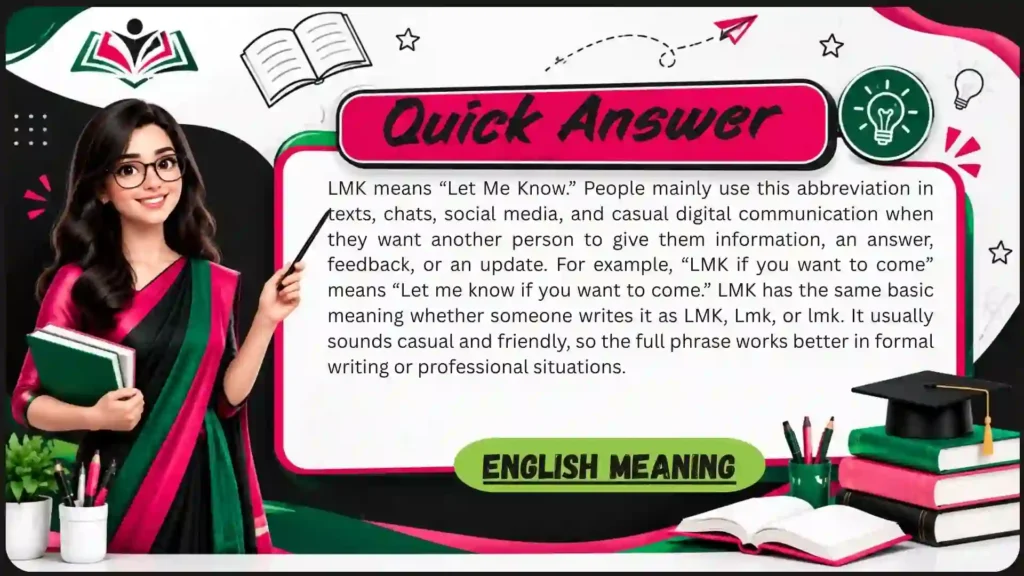
LMK means “Let Me Know.” People mainly use this abbreviation in texts, chats, social media, and casual digital communication when they want another person to give them information, an answer, feedback, or an update. For example, “LMK if you want to come” means “Let me know if you want to come.” LMK has the same basic meaning whether someone writes it as LMK, Lmk, or lmk. It usually sounds casual and friendly, so the full phrase works better in formal writing or professional situations.
TL;DR
- 💬 LMK means “Let Me Know.”
- 📱 People commonly use LMK in texting, chats, and social media.
- 📝 LMK meaning in text stays the same as its full phrase.
- 🙂 LMK usually creates a casual and friendly tone.
- 💼 Use “please let me know” when you need a more formal tone.
- 🔤 LMK, Lmk, and lmk have the same meaning.
- ↩️ You can respond to LMK by giving the requested information or saying you’ll provide it later.
You Might Also Like That: Situationship Meaning
What Does LMK Mean?
LMK stands for “Let Me Know.” This abbreviation tells someone that you want them to share information with you. You might use it when asking about plans, opinions, choices, availability, or future updates. For example, “LMK what you think” simply means “Let me know what you think.” This makes LMK a useful text abbreviation for quick everyday communication.
The abbreviation does not change the meaning of the original phrase. Instead, it makes the message shorter and faster to type. People commonly use LMK in casual conversations, online messages, and digital communication, where short expressions feel natural.
LMK Full Form
The LMK full form is “Let Me Know.” Each letter represents the first letter of the three words: L for “let,” M for “me,” and K for “know.” People may write it as LMK, lmk, or Lmk, and these forms carry the same meaning.
LMK Meaning in Text and Chat
When someone uses LMK meaning in text, they usually ask you to provide information or respond to a question. For example, “LMK when you get home” asks you to send an update after you arrive. Similarly, “LMK if you need help” asks you to tell the person whether you need assistance.
You can find LMK in texting, group chats, social media messages, and online conversations. The meaning remains the same across these platforms. People choose LMK because it keeps messages short while still making the request clear.
What Does LMK Mean in a Text Message?
What does LMK mean in a text message? It means “Let Me Know.” For example, if a friend texts, “LMK if you’re coming,” they want you to tell them whether you plan to come. The phrase usually asks for a response, update, opinion, or decision.
How to Use LMK in a Sentence
You can use LMK in many sentence patterns. It often comes before information you want someone to provide. For example, “LMK if you’re available tomorrow” asks about availability, while “LMK what you decide” asks for a decision. You can also place LMK at the end of a sentence, such as “If you need anything, LMK.”
Here are some natural examples:
- 💬 “LMK if you want to join us.”
- 📅 “LMK when you’re free.”
- 👍 “LMK what you think about it.”
- 📢 “LMK if you hear any news.”
When Do People Use LMK?
People use LMK whenever they want another person to share information. Common situations include making plans, asking for opinions, requesting confirmation, or waiting for an update. For example, a friend might say, “LMK what time works for you,” while a coworker might write, “LMK if you need the report.”
The expression can also ask someone to respond later. “LMK when you have time” does not necessarily demand an immediate reply. It simply tells the person to share the information when they can.
LMK Text Examples in Real Conversations
Short conversations can make the LMK meaning in text easier to understand. People use the abbreviation naturally when they need an answer or update.
Making Plans
Alex: “Are you free Saturday?”
Sam: “I think so.”
Alex: “Great, LMK when you’re sure.”
Asking for Feedback
Mia: “I finished my presentation.”
Leo: “Nice! LMK what you need me to check.”
Requesting an Update
Sara: “I’m waiting for the delivery.”
Tom: “Okay, LMK when it arrives.”
Asking for Confirmation
Jake: “I can pick you up at 7.”
Emma: “Sounds good. LMK if anything changes.”
Is LMK Formal or Informal?
LMK is generally informal. People commonly use it with friends, family members, classmates, and people they regularly chat with. It fits naturally into text messages, social media, casual emails, and messaging apps because these settings often favor short and relaxed language.
You can sometimes see LMK in workplace communication, especially in quick messages between coworkers who have a casual relationship. However, you should avoid it when you need a clearly formal tone. In those situations, writing “Please let me know” sounds more polished and professional.
Can You Use LMK in a Professional Email?
You can use LMK in some casual workplace emails, but the full phrase usually makes a better choice. For example, instead of “LMK if you have questions,” write “Please let me know if you have any questions.” Use the longer version for clients, managers, official requests, job applications, and other formal communication.
Is LMK Rude or Polite?
LMK is not automatically rude. Your wording and the situation determine how the message sounds. A friend who writes “LMK when you’re free” will usually sound casual and normal. However, sending only “LMK.” can sometimes feel short or slightly abrupt, especially when you speak to someone you do not know well.
You can make the request sound softer by adding polite words. For example, “Please LMK when you’re available” sounds more considerate than a short “LMK.” For very formal communication, “Please let me know” remains the safest option.
How to Respond When Someone Says LMK
When someone says LMK, they usually want you to provide the information they requested. Your response should address that request directly. You do not always need to repeat the phrase “let me know.”
For example:
- 💬 “LMK if you’re coming.” → “Yes, I’ll be there.”
- 👍 “LMK what you think.” → “I prefer the second option.”
- 📅 “LMK when you’re available.” → “I’m free after 6.”
- ⏳ “LMK when you get home.” → “Sure, I’ll message you then.”
If you do not have an answer yet, you can simply say, “I’ll let you know.”
LMK vs. Similar Expressions
Although several expressions can have similar meanings, they do not always serve the same purpose.
| Expression | Meaning | Main Purpose |
| LMK | Let me know | Requests information |
| FYI | For your information | Gives information |
| Keep me posted | Keep me updated | Requests ongoing updates |
| Tell me | Give me information | Makes a direct request |
| Update me | Give me the latest information | Requests an update |
LMK vs. FYI
LMK and FYI serve different purposes. LMK asks another person to provide information, while FYI usually gives information to someone. For example, “LMK when the meeting starts” asks for an update. In contrast, “FYI, the meeting starts at 3” provides the information.
LMK vs. “Let Me Know”
LMK and “let me know” have exactly the same basic meaning. The main difference is their form. LMK is the abbreviated version, while “let me know” uses the complete phrase. Use LMK when you want a quick, casual style. Choose the full phrase when you want your message to sound clearer or more formal.
Should LMK Be Capitalized?
You can write LMK in uppercase or lmk in lowercase, and both forms mean “let me know.” In casual texting, people often use lowercase abbreviations because they type quickly and use a relaxed writing style. You may also see Lmk, although it appears less consistently.
There is no change in meaning between these forms. The important point is to keep your writing consistent. If you write other abbreviations in lowercase throughout a casual message, lmk can fit that style naturally.
Where Can You Use LMK?
You can use LMK in many forms of casual digital communication, including:
- 📱 Text messages
- 💬 Group chats
- 🌐 Social media
- 👥 Messaging apps
- 📧 Casual emails
- 💼 Informal workplace chats
However, avoid LMK when you need highly formal language. Academic assignments, official documents, job applications, formal business letters, and important professional emails usually benefit from the complete phrase “please let me know.” Choosing the right form helps your message match the situation and audience.
Other Ways to Say LMK
You can replace LMK with several expressions depending on the tone you want.
Casual alternatives:
- 💬 Let me know
- Tell me
- Keep me posted
- Update me
More polite or formal alternatives:
- ✉️ Please let me know
- Please keep me informed
- Please keep me updated
- I would appreciate an update
The best choice depends on your relationship with the reader and the situation. “Tell me” sounds more direct, while “please let me know” sounds more polite and professional.
Frequently Asked Questions About LMK
What does LMK mean in texting?
LMK means “Let Me Know” in texting. People use it when they want someone to provide information, give an answer, share an opinion, or send an update.
What does LMK stand for?
LMK stands for “Let Me Know.” It is a common abbreviation used in casual digital communication.
Is LMK formal or informal?
LMK is mainly informal. It works well in texts, chats, and casual messages. Use “please let me know” for more formal communication.
Is LMK rude to say?
LMK is not inherently rude. However, a very short message such as “LMK” can sound direct or abrupt depending on the context and relationship.
Can LMK be used in professional emails?
You can use LMK in some casual workplace communication, but “please let me know” usually sounds more professional and appropriate for formal emails.
What should I reply when someone says LMK?
Give the person the information they requested. If you need more time, you can say “I’ll let you know” and respond later when you have an answer.
Can LMK be written as lmk?
Yes. LMK, Lmk, and lmk all have the same meaning. Lowercase lmk often appears in casual texting and online chats.
Final Thought
LMK means “Let Me Know,” and people use it every day in texts, chats, and other casual digital conversations. It provides a quick way to ask someone for information, feedback, confirmation, or an update. Once you understand the LMK meaning in text, you can easily recognize it in messages and use it naturally yourself.
Remember that LMK is casual, so context matters. Use it freely in friendly conversations, but choose “please let me know” when you want a more polite or professional tone. Whether someone writes LMK or lmk, the meaning stays the same.