

Modern dating has created many new relationship terms, and situationship is one of the most common. If you are searching for the situationship meaning, it usually describes a romantic connection where two people spend time together, flirt, date, or become emotionally close without clearly defining the relationship. There may be attraction and even emotional intimacy, but the relationship status, commitment, and future often remain unclear.
So, what is a situationship in simple words? It is often an undefined relationship that feels like more than friendship but less clear than a committed relationship. People may experience mixed signals, unclear expectations, inconsistent communication, or lack of commitment. Understanding what does situationship mean can help you recognize the signs, set healthier boundaries, and decide whether the connection truly matches what you want.
Quick Answer — What Does Situationship Mean?
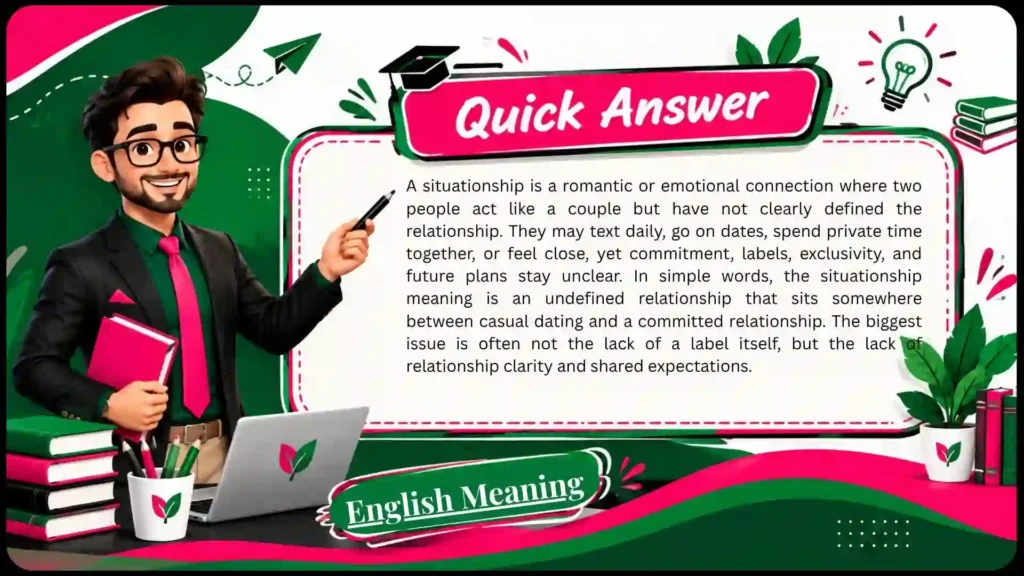
A situationship is a romantic or emotional connection where two people act like a couple but have not clearly defined the relationship. They may text daily, go on dates, spend private time together, or feel close, yet commitment, labels, exclusivity, and future plans stay unclear.
In simple words, the situationship meaning is an undefined relationship that sits somewhere between casual dating and a committed relationship. The biggest issue is often not the lack of a label itself, but the lack of relationship clarity and shared expectations.
TL;DR 📌
- ❤️ A situationship is a romantic or emotional connection without a clearly defined relationship label or commitment.
- 💬 People in situationships may text, date, become physically close, and act like a couple while their relationship status remains unclear.
- 🚩 Common situationship signs include mixed signals, inconsistent communication, unclear exclusivity, limited future plans, and avoiding the “What are we?” conversation.
- 🔄 The main difference between a situationship vs relationship is usually clarity, commitment, expectations, and future direction.
- 🤝 A situationship is not automatically unhealthy. It can work when both people communicate honestly and want the same type of connection.
- 🧠 Emotional attachment can make situationships difficult, especially when one person wants commitment and the other prefers something casual.
- 🔐 Setting clear boundaries, expectations, and exclusivity rules can reduce confusion.
- 💕 A situationship can turn into a relationship when both people want commitment and openly discuss their future.
- 🚪 Consider leaving if your needs stay unmet, boundaries are ignored, or the relationship causes constant uncertainty.
- 🌱 Understanding the situationship meaning can help you decide whether the connection fits your relationship goals and emotional needs.
You Might Also Like That: To vs Too
What Is a Situationship?
A situationship can include romance, emotional closeness, physical intimacy, or regular dating without a clear agreement about what the connection means. One person may think the relationship is becoming serious while the other may still see it as casual.
This creates relationship ambiguity, especially when both people avoid talking about commitment. A situationship can feel comfortable at first, but problems may appear when feelings grow and expectations become different.
Where Did the Term Situationship Come From?
The word situationship became popular through modern dating culture and social media. People started using it to describe connections that felt stronger than casual friendship but weaker than an official relationship.
Today, the term often appears in conversations about Gen Z dating, dating apps, relationship labels, commitment, mixed signals, and modern romance.
What Does a Situationship Look Like in Real Life?
A situationship often looks almost like a normal relationship from the outside. You may spend weekends together, text often, share personal stories, become physically close, and even feel jealous when the other person sees someone else.
The difference is that neither person has clearly discussed commitment, exclusivity, or future expectations. This lack of clarity can create confusion even when the connection feels real.
You Might Also Like That: What Does WYF Mean
Simple Situationship Example
Imagine two people who meet every weekend, text daily, and act romantically. They enjoy each other’s company, but they never call each other boyfriend or girlfriend.
One person hopes the connection will become serious, while the other avoids talking about the future. That is a common situationship example.
Situationship Texting Example
In a situationship texting pattern, one person may send loving messages for several days and then disappear or reply slowly.
The conversation may feel romantic, but the communication stays inconsistent. Texting alone does not define a relationship, so clear conversation matters more than emojis, late-night messages, or frequent chats.
9 Signs You’re in a Situationship
You may be in a situationship if the connection feels romantic but still leaves you confused.
Common situationship signs include:
- 💬 You have never defined the relationship
- 🔄 Communication feels inconsistent
- ❓ You often wonder, “What are we?”
- 📅 Future plans rarely happen
- ❤️ Feelings exist, but commitment does not
- 👥 You rarely meet friends or family
- 🔐 Exclusivity stays unclear
- 🚩 You receive mixed signals
- ⏳ The relationship does not move forward
One sign alone does not prove anything. Look at the overall pattern and ask whether both people understand the relationship in the same way.
Situationship vs Relationship — What’s the Difference?
The biggest difference between a situationship vs relationship is usually clarity. A committed relationship normally includes shared expectations, while a situationship may leave important questions unanswered.
You Might Also Like That: Effect vs Affect
| Factor | Situationship | Relationship |
| Label | Often unclear | Usually defined |
| Commitment | May be uncertain | Usually clear |
| Exclusivity | Not always discussed | Often agreed |
| Future plans | Limited | More common |
| Communication | Can be inconsistent | Usually more stable |
| Expectations | May differ | Usually discussed |
A label alone does not create a healthy relationship. Communication, trust, respect, and shared goals matter most.
Situationship vs Dating
A situationship and dating are not always the same. Two people can date casually while still clearly understanding what they want.
A situationship often becomes confusing because the couple avoids discussing relationship status, commitment, or future plans.
Situationship vs Casual Dating
In casual dating, both people may openly agree that they are not looking for commitment. That creates clarity, even if the relationship stays casual.
In a situationship, one or both people may feel unsure about what the connection means.
Situationship vs Exclusive Dating
Exclusive dating usually means both people agree not to date others. However, exclusivity does not always mean they consider themselves a committed couple.
A situationship can also be exclusive if both people agree, but the relationship may still remain undefined.
Situationship vs Friends With Benefits
A situationship vs friends with benefits comparison often depends on emotional and romantic involvement. Friends with benefits usually involves friendship plus physical intimacy without a traditional romantic commitment.
You Might Also Like That: What Does SMH Mean in Text
A situationship may include:
- ❤️ Romantic feelings
- 🍽️ Dates
- 💬 Daily texting
- 🤝 Emotional support
- 🔥 Physical intimacy
The key difference is that a situationship often feels like a relationship without clearly becoming one.
Situationship vs Talking Stage
The talking stage vs situationship can look similar, but they usually happen at different points.
The talking stage often happens early. Two people are getting to know each other and deciding whether they want to date.
A situationship may last much longer and include deeper emotional or physical intimacy. The relationship may feel established, but its direction stays unclear.
Why Do Situationships Happen?
People enter situationships for many reasons. Some enjoy the flexibility, while others may not feel ready for a serious relationship.
Common reasons include:
- Fear of commitment
- Different relationship goals
- Convenience
- Emotional uncertainty
- Wanting independence
- Avoiding difficult conversations
- Testing compatibility
- Not being ready for a relationship
A situationship does not always mean someone is dishonest. Sometimes both people genuinely want something casual.
Why Are Situationships So Common Today?
Modern dating apps and social media give people more choices and make casual connections easier. Many people also delay commitment while they focus on work, education, or personal goals.
At the same time, texting makes it easy to stay emotionally connected without having serious conversations about the future.
Are Situationships Healthy or Unhealthy?
A situationship is not automatically healthy or unhealthy. What matters most is whether both people understand and accept the arrangement.
A healthy situationship requires honesty, respect, communication, and clear boundaries.
You Might Also Like That: TS Meaning in Text
Signs of a Healthy Situationship
Healthy signs include:
- ✅ Both people understand the relationship
- ✅ Expectations match
- ✅ Boundaries are respected
- ✅ Communication feels honest
- ✅ Neither person feels pressured
Situationship Red Flags
Watch for situationship red flags such as manipulation, constant confusion, ignored boundaries, jealousy without commitment, or one person waiting endlessly for change.
Pros and Cons of a Situationship
Situationships can offer freedom, but they can also create emotional stress.
| Pros | Cons |
| More flexibility | Uncertainty |
| Less pressure | Mixed signals |
| Time to explore compatibility | Lack of security |
| Independence | Emotional confusion |
| Casual connection | Possible heartbreak |
The arrangement works best when both people want the same thing. Problems often begin when one person wants commitment and the other wants to keep things casual.
Why Can Situationships Feel So Intense?
Situationships can feel intense because feelings may grow without clear security. One day the connection feels close, and the next day it may feel distant.
That uncertainty can make people think about the relationship even more. Mixed signals, emotional attachment, hope, and lack of closure can all increase emotional stress.
Situationships and Attachment Styles
People with anxious attachment may struggle more with uncertainty and inconsistent communication.
People with avoidant tendencies may feel more comfortable in relationships that require less commitment.
However, attachment style alone does not decide how someone behaves. Communication still matters.
Can You Fall in Love in a Situationship?
Yes, you can develop real feelings or even fall in love during a situationship. Relationship labels do not control emotions.
You may build emotional intimacy, trust, attraction, and attachment even without official commitment.
The important question is whether both people want the same future. Love alone cannot create a healthy relationship if one person wants commitment and the other does not.
Can a Situationship Be Exclusive?
Yes, a situationship can be exclusive if both people clearly agree not to date anyone else.
However, exclusivity does not automatically equal commitment. Two people may be exclusive while still avoiding labels or long-term plans.
Never assume exclusivity. Talk openly about what it means to both of you.
You Might Also Like That: What Does SMH Mean in Text
How Long Does a Situationship Last?
There is no fixed rule for how long a situationship should last. Some last a few weeks, while others continue for months or even years.
The more important question is whether the connection still works for both people.
When Has a Situationship Gone On Too Long?
It may have gone on too long if:
- You want commitment but nothing changes
- You feel anxious more than happy
- Your needs stay unmet
- You keep waiting for future promises
- The relationship prevents you from moving forward
How to Set Boundaries in a Situationship
Healthy situationship boundaries protect both people from confusion.
Talk about:
- 💬 Communication expectations
- ❤️ Emotional needs
- 🔐 Exclusivity
- 🔥 Physical intimacy
- 📅 Time together
- 🎯 Relationship goals
Do not set boundaries only to make the other person change. Set them to protect your own emotional wellbeing and make your needs clear.
How to Ask for Clarity Without Giving an Ultimatum
You do not need to create drama to ask, “What are we?”
Choose a calm moment and explain what you want. You might say that you enjoy the connection but want to understand where it is going.
Ask the other person what they want and listen carefully to the answer. Avoid trying to convince them to choose commitment if they clearly want something different.
Can a Situationship Turn Into a Relationship?
Yes, a situationship can turn into a committed relationship when both people want the same thing.
You Might Also Like That: Effect vs Affect
The change usually requires honest communication, clear expectations, and consistent effort.
Signs Your Situationship May Be Becoming Serious
Look for signs such as:
- More reliable communication
- Regular future plans
- Meeting friends or family
- Deeper emotional openness
- Discussing exclusivity
- Talking about relationship goals
- Defining the relationship
Actions often reveal more than promises.
When Should You Leave a Situationship?
Consider leaving when the connection repeatedly fails to meet your emotional needs.
You may need to walk away if your goals do not match, your boundaries are ignored, or you feel constantly confused and anxious.
Do not stay only because you hope the other person will eventually change. Pay attention to what the relationship is now, not only what you hope it might become.
How to End a Situationship Respectfully
You can end a situationship without creating unnecessary conflict.
Be clear and respectful. Explain that the current arrangement no longer works for you and that you need something different.
Avoid ghosting unless safety is a concern. A short, direct conversation often gives both people more clarity.
Afterward, set boundaries around texting, seeing each other, and social media if you need space to move on.
How to Get Over a Situationship
Getting over a situationship can feel difficult because the relationship may end without a traditional breakup or clear closure.
Give yourself permission to feel disappointed. Reduce contact if communication keeps reopening old feelings.
Focus on friends, routines, hobbies, and your own goals. Most importantly, stop waiting for another person to provide perfect closure. You can create your own closure by accepting what happened and deciding what you want next.
What a Situationship Can Teach You About What You Want
Even an unclear relationship can teach you useful lessons.
You may discover that you need:
- Clearer communication
- More consistency
- Exclusivity
- Emotional safety
- Stronger boundaries
- Shared future goals
- A committed relationship
These lessons can help you recognize your needs earlier in future relationships.
You Might Also Like That: What Does SMH Mean in Text
FAQs About Situationship Meaning
Is a situationship considered dating?
Sometimes. A situationship can involve dating activities, but it usually lacks the clear expectations that many dating relationships have.
Is a situationship the same as friends with benefits?
No. Friends with benefits usually centers on friendship and physical intimacy, while a situationship may include stronger romantic and emotional behavior.
Can a situationship become a serious relationship?
Yes. It can become serious if both people openly discuss their goals and choose commitment.
Can you love someone in a situationship?
Yes. Real feelings can grow even when the relationship has no official label.
Can a situationship be exclusive?
Yes, but both people need to clearly agree on exclusivity.
How long do situationships usually last?
There is no standard length. They can last weeks, months, or longer.
Why are situationships hard to get over?
They often involve emotional attachment, uncertainty, mixed signals, and lack of closure, which can make moving on harder.
Is a situationship toxic?
Not automatically. It becomes unhealthy when communication is poor, boundaries are ignored, or both people want different things.
Final Thoughts
Understanding the situationship meaning can help you see an unclear romantic connection more clearly. A situationship may include attraction, dating, emotional intimacy, and even love, but commitment, expectations, exclusivity, and future plans often remain uncertain.
A situationship can work when both people genuinely want the same arrangement. Problems usually appear when expectations stop matching. The best approach is simple: communicate clearly, respect boundaries, pay attention to actions, and choose the kind of relationship that supports your emotional needs.